Twenty-Four Weeks of Moderate Aerobic Work, for Sperm Quality
Half an hour of moderate aerobic work, three days a week, held for twenty-four weeks. The moderate part is the finding: in the trial this comes from, the steady group came out ahead of the two interval groups on the main semen measures.
Why it works
The rest of this shelf is written for the person carrying the pregnancy, and roughly half of infertility cases involve a male factor, so this entry is for the other side of it. The trial behind it is Hajizadeh Maleki and Tartibian, published in Reproduction in 2017, which randomized several hundred sedentary men to one of three training patterns or to no training: moderate continuous work on a treadmill, interval work, and a higher-volume interval arm. After twenty-four weeks every training group had better semen parameters than the controls, and the moderate continuous group had the largest gains in sperm concentration, motility and morphology, alongside lower markers of oxidative stress and inflammation in seminal plasma. The same pair ran a smaller randomized trial in men already diagnosed as infertile, published in Cytokine the same year, with twenty-four weeks of moderate treadmill work producing the same direction of change. The mechanism they propose is that sperm membranes are unusually rich in polyunsaturated fat and thin on repair machinery, which leaves them exposed to oxidative damage, and that steady training raises seminal antioxidant capacity while harder training adds oxidative load of its own. Four limits sit on top of that. Every outcome in both trials is a semen measurement, which is a proxy: no trial has shown that training this way produces more pregnancies or more live births, and that is the question anyone reading this is asking. Nearly all of the randomized evidence comes from this one research group, and independent replication at this size is missing, which is the limitation that should hold back the strongest reading of it. The men enrolled were sedentary at the start, so nothing here says what happens to someone already training. And the gains faded once training stopped: measurements taken after a detraining period drifted back toward baseline, which makes this a thing you keep doing rather than a course you complete. Two observational lines sit either side of it. Gaskins and colleagues, in the Rochester Young Men's Study, found more moderate-to-vigorous activity tracking with higher sperm concentration in young men. Wise and colleagues, reporting in Fertility and Sterility in 2011 on men attending an infertility clinic, found bicycling of five or more hours a week tracking with lower sperm concentration and lower total motile count, with heat and pressure in the saddle the usual explanation. Neither was randomized, and both are one more reason the volume here is moderate and the bike is not the only option offered.
How to do it
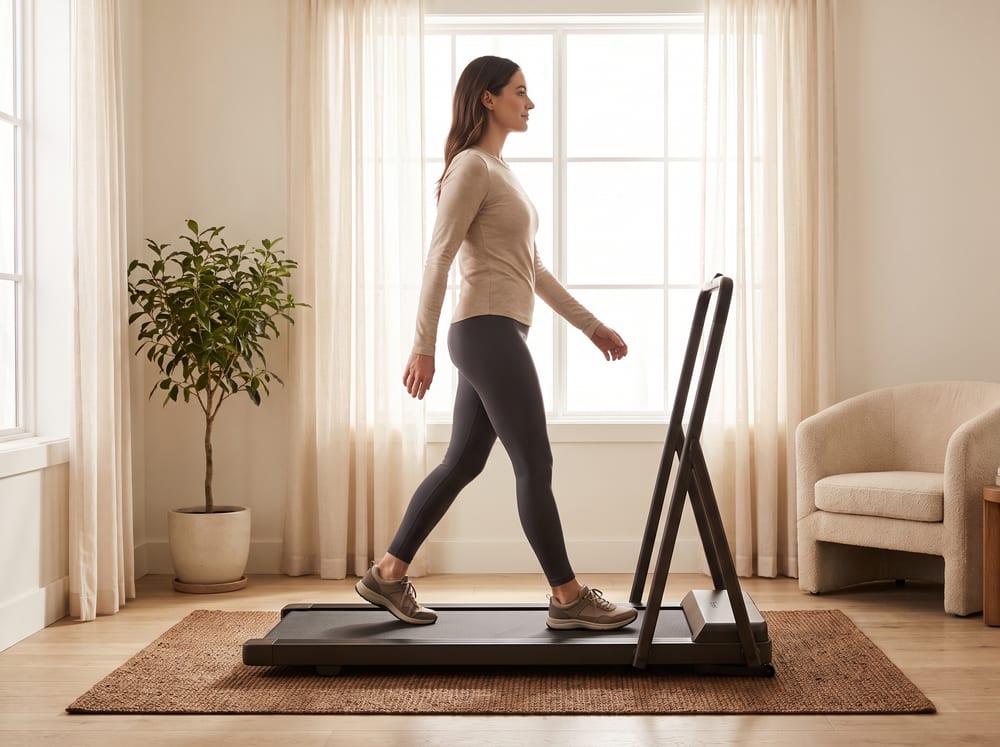
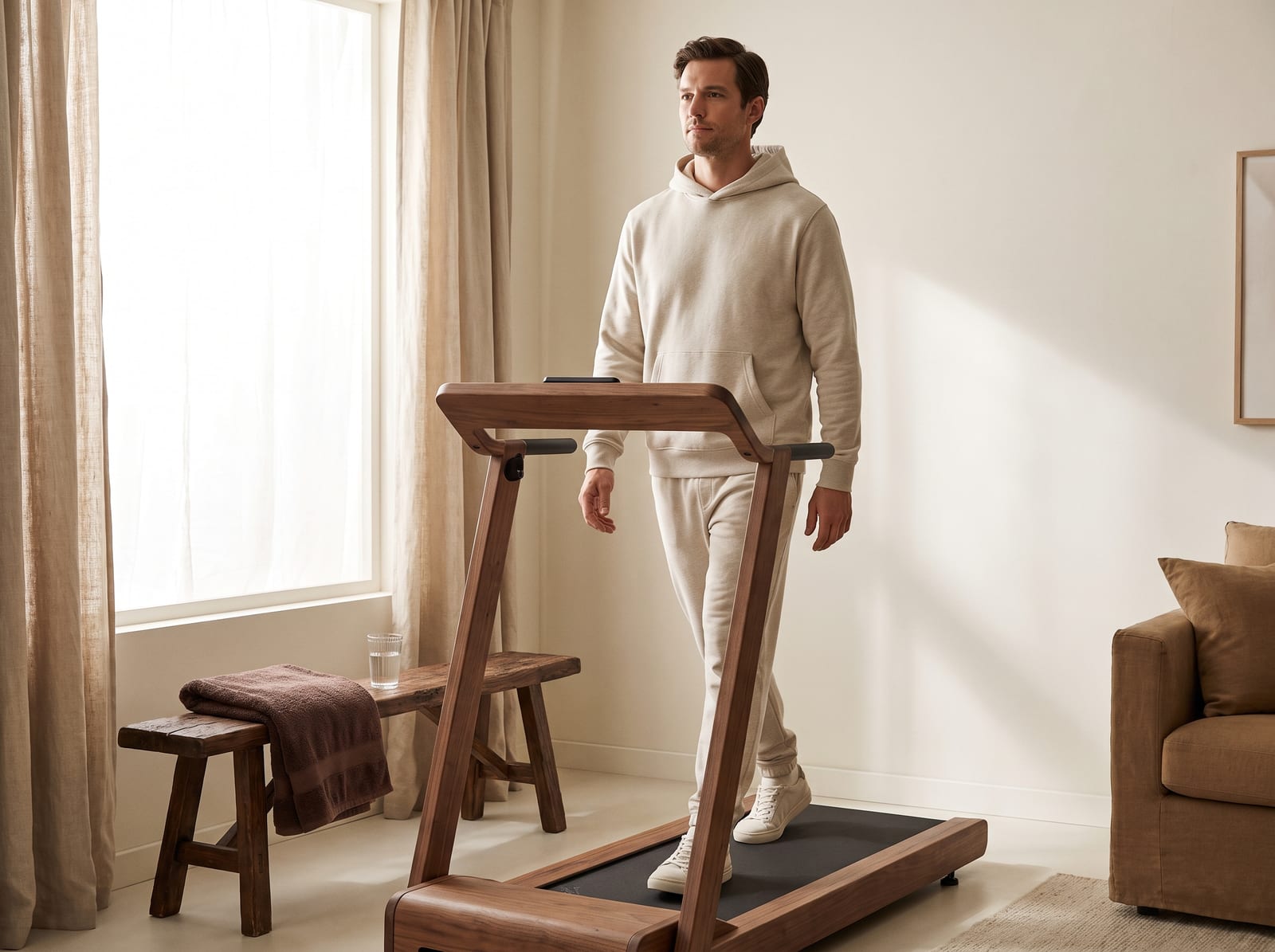
- Pick a mode you can repeat for six months. The trial used a treadmill, and anything that holds a steady moderate effort for half an hour will do the same job.
- Warm up for five minutes easy, building until your breathing has changed.
- Hold twenty-five to thirty minutes at a moderate pace. Moderate is where you can still speak in full sentences and would rather not sing, which for most people lands around a brisk walk on an incline or an easy cycling gear.
- Cool down for five minutes easy.
- Repeat three days a week, with a day off between sessions.
- Keep going past the first few months. The measurements in the trial were taken at twenty-four weeks, and sperm take roughly two to three months to develop, so nothing before about twelve weeks reflects what the training did.
- If cycling is your mode, split the volume across other modes rather than adding hours in the saddle, and skip the sauna or hot tub afterwards.
Dose: 25 to 30 minutes of moderate aerobic work, 3 days a week, for 24 weeks and onward. Build from one or two days a week if three is more than you have now.
⚠ Educational content for discussion with a clinician, not medical or fertility advice. Difficulty conceiving is worth a semen analysis and a proper workup rather than a training plan, and this entry is not a substitute for either. Get clearance before starting regular aerobic work if you have a cardiac condition, uncontrolled blood pressure, or have been sedentary for years, and stop for chest pain, palpitations, or dizziness. Heat is the specific thing to watch: long hot baths, saunas, and very high weekly cycling volumes have all tracked with poorer semen measures, so keep sessions moderate and cool down properly rather than finishing in a hot tub.