Body Scan and Breathing Practice in a Trial of Inflammation Markers
About thirty minutes a day of body scan and breathing meditation, over a three-month module. In one trial of 298 healthy adults, no training module had a significant group-level effect on IL-6 or hs-CRP, two blood markers of inflammation. In an exploratory analysis, people with relatively higher starting IL-6 showed a larger fall in IL-6 after this module than after the trial's compassion-based module.
Why it works
Body scan and breathing meditation were the daily core practices of the trial's Presence module, which trained present-moment awareness, attention and interoception. The trial's authors cite one proposed account of how such training might reach inflammation: Creswell and Lindsay propose that its effects run through lower experienced stress and lower activity in the physiological pathways linked to it. The trial tested this with blood markers in healthy adults who had not meditated before. Its group-level result was null, and its authors call the exploratory finding one that needs replication.
One trial, registered at ClinicalTrials.gov as NCT01833104, in which 332 healthy adults aged 20 to 55 were recruited and assigned to three training cohorts or a retest control cohort. The abstract reports 298 healthy adults; the Results report 296 participants with all covariates. Each training module lasted three months. The Presence module carries the body scan and breathing meditation described here. For the group as a whole, none of the three modules significantly affected IL-6 or hs-CRP. In an exploratory analysis, people with relatively higher starting IL-6 showed a larger fall after Presence than after the Affect module, and a marginal difference from no training (p = 0.061). For hs-CRP, the result after Presence held only in men. The authors call for replication and suggest a floor effect in their healthy sample. For these exploratory results, the regression analyses found no significant effect of self-reported stress, behaviour change or practice frequency. The trial did not track whether participants had minor illnesses or infections when tested, and it measured markers in blood, so it says nothing about colds or infections. The ReSource Project was funded by the European Research Council and the Max Planck Society, and the funders had no involvement in the study design, data collection, analysis or interpretation. The immune marker analyses were funded by one of the authors, G. P. Chrousos. The authors declare no competing interests.
How to practice
- The steps below are a general body scan and breathing practice. The trial taught its own version through a three-day retreat, weekly two-hour group sessions and daily home practice.
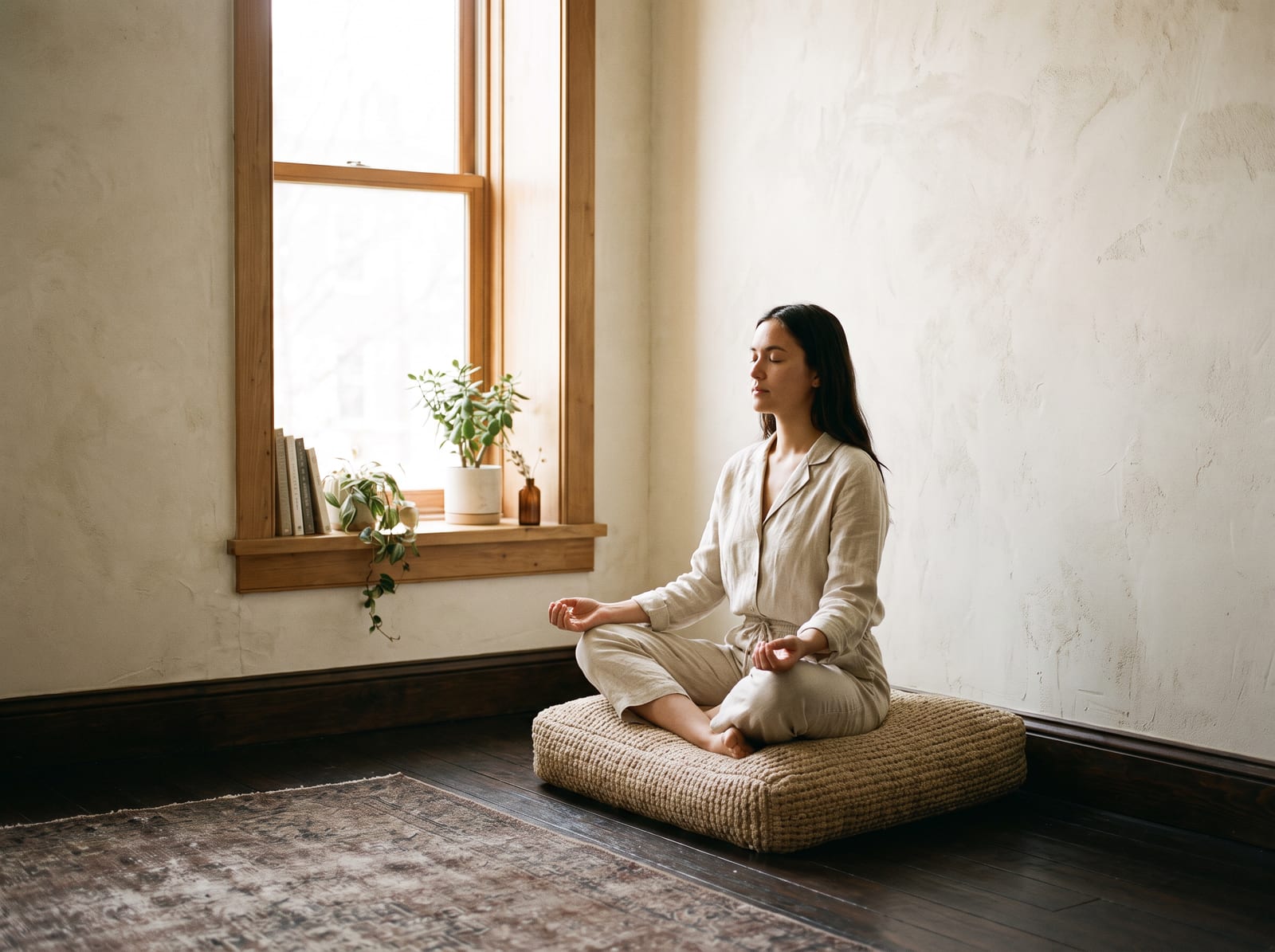
- Sit or lie down somewhere you will not be interrupted for half an hour. Let a few ordinary breaths pass before you begin.
- Start with a body scan. Move your attention slowly from the feet up through the legs, the trunk, the arms, the neck and the face, noticing what is there without trying to change it.
- Then rest your attention on the breath at one point, such as the nostrils or the belly. Notice each breath as it arrives and leaves.
- When attention wanders, note where it went and bring it back to the breath.
- Finish by sitting for a minute with the whole body in view before you get up.
- The trial's daily home practice was about thirty minutes, with weekly two-hour group sessions and a three-day retreat at the start of each module.
- Each module lasted three months, and blood was drawn at baseline and after each module.
- The trial found no significant group-level effect on either marker.
⚠ The trial enrolled healthy adults aged 20 to 55 who had not meditated before, and it measured inflammation markers in blood. It did not track whether participants had minor illnesses or infections when tested. Stop if the practice makes you feel worse, and keep to any treatment a clinician has prescribed.