Twice-Daily Diaphragmatic Breathing, Adapted From a Fertility Program's Relaxation Homework
A breathing-only adaptation written for this library: 20 minutes of diaphragmatic breathing, twice a day. A 2020 pilot trial in women with infertility assigned relaxation exercises twice a day for 20 minutes within a ten-module internet program, and diaphragmatic breathing was one of the techniques it taught. The instructions come from a separate 2017 trial in healthy adults.
Why it works
The authors of the 2020 pilot trial write that the uncertainty of infertility and reproductive medical treatment can evoke or perpetuate anxiety. Their internet version of the Mind/Body Program for Fertility taught relaxation techniques, including diaphragmatic breathing and Hatha yoga, alongside mindfulness, cognitive restructuring and other skills across ten modules, with therapist feedback after each module. Its homework included relaxation exercises twice a day for 20 minutes. That passage gives the dose for relaxation exercises in general and assigns no share of it to diaphragmatic breathing. Giving all 20 minutes to diaphragmatic breathing is this library's adaptation. The breathing instructions come from Ma and colleagues' 2017 trial, in which the breathing group did 15 minutes of diaphragmatic breathing a session, 20 sessions over eight weeks, under a coach and with a recording device. The authors of the 2020 trial write that a future trial with an active control could help isolate the specific and nonspecific components of their program.
One randomised pilot trial, Clifton and colleagues in PLoS One in 2020, is behind the dose. It randomised 71 women who self-identified as nulliparous and meeting criteria for infertility to the internet program (36) or a wait-list (35). Its primary outcomes were retention, modules completed and satisfaction. Distress and self-reported pregnancy were secondary and exploratory. Compared with the wait-list, the program group had significant reductions in self-reported anxiety, depression, and infertility-related social and sexual stress, with medium-to-large effect sizes (d 0.45 to 0.86). The result for overall perceived stress was marginal on the unstandardized coefficient (p = .078) and significant on the standardized one (p = .041). No significant difference was observed for relationship concern, need for parenthood or rejection of a childfree lifestyle. The time between the first and last assessments was significantly longer in the program group, and the authors write that the distress and pregnancy findings are qualified by that difference. At the mid-assessment, sent at five weeks, the groups differed significantly for depression and not for anxiety. Self-reported pregnancy at study close was 53% in the program group and 20% in the wait-list group, with odds 4.47 times higher (95% CI 1.56 to 12.85). Participants completed four modules on average, 39% reached module ten, and 66% completed the post-assessment. The authors call for replication with an active control group. These results are for the whole program, and the trial did not test the relaxation homework by itself. The work was supported by the Department of Psychological Science at the University of Vermont. One author discloses co-ownership of FertiCalm LLC, FertiStrong LLC and Aliz Health Apps LLC, which the paper says had no role in the study, along with speaker bureau work for Abbott, Merck, Ferring and EMD Serono and a past grant from Ferring. The instructions come from Ma and colleagues in Frontiers in Psychology in 2017, a pilot trial with 40 adults at a Beijing IT company, assigned to breathing training or a control group by alternating the order of registration. People with yoga, tai chi, Qigong or other mind-body training experience were excluded, so the participants learned the technique without that background. This entry uses that trial for its instructions and draws no fertility claim from it.
How to practice
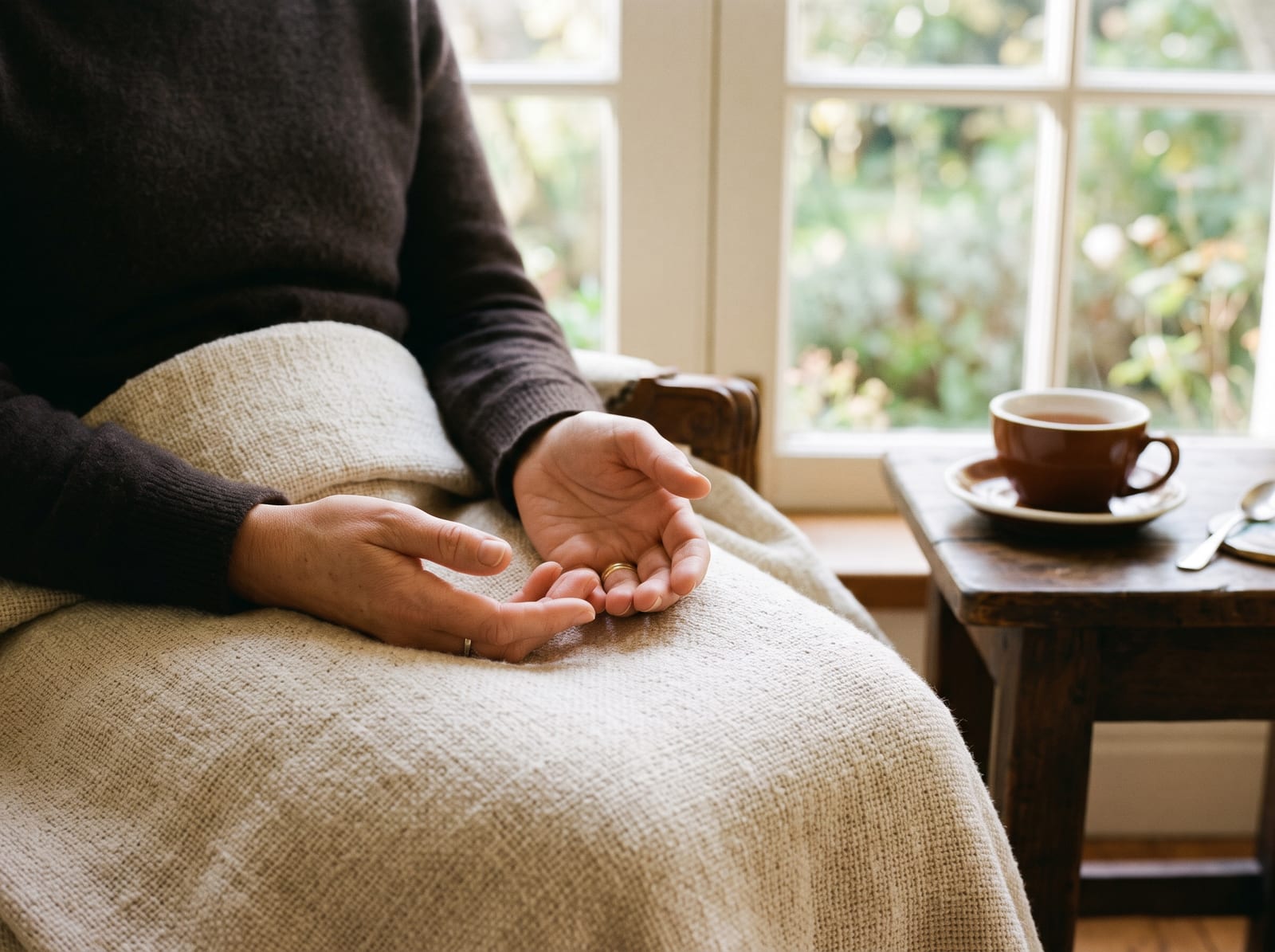
- Sit comfortably in a chair and close your eyes.
- Breathing through your nose, inhale as deeply as you can while your abdomen expands.
- Exhale as slowly as you can while your abdomen contracts, in a rhythm you set yourself.
- Keep your attention on your breathing and the sensations it produces in your body.
- Continue for 20 minutes, twice a day.
- The 2020 program's homework was relaxation exercises twice a day for 20 minutes, and the 2017 trial's sessions held 15 minutes of diaphragmatic breathing.
⚠ Neither trial tested 20 minutes of diaphragmatic breathing alone, twice a day, without a coach. The 2020 trial's eligibility criteria required no suicidal ideation or intent, psychotic disorder, eating disorder, or substance abuse or dependence. Most of its participants were recruited online, and the authors write that the results may differ from studies recruiting through more traditional means. Participants with higher general stress at baseline were more likely to drop out after the first module. The 2017 trial excluded people with a history of physical health problems, including cardiovascular, cerebrovascular or respiratory diseases, autoimmune diseases, diabetes, neuropathy, and drug or alcohol abuse. Its coach gave special guidance to participants whose breathing stayed above 6 breaths a minute two minutes into the session.