Twelve Weeks of Tai Chi for Broken Sleep
Yang-style 24-form tai chi, one hour, three mornings or afternoons a week, for twelve weeks. In a Hong Kong trial of 320 adults over sixty with long-standing insomnia, it cut the time spent awake in the night by about thirteen minutes and the gains were still there two years later.
Why it works
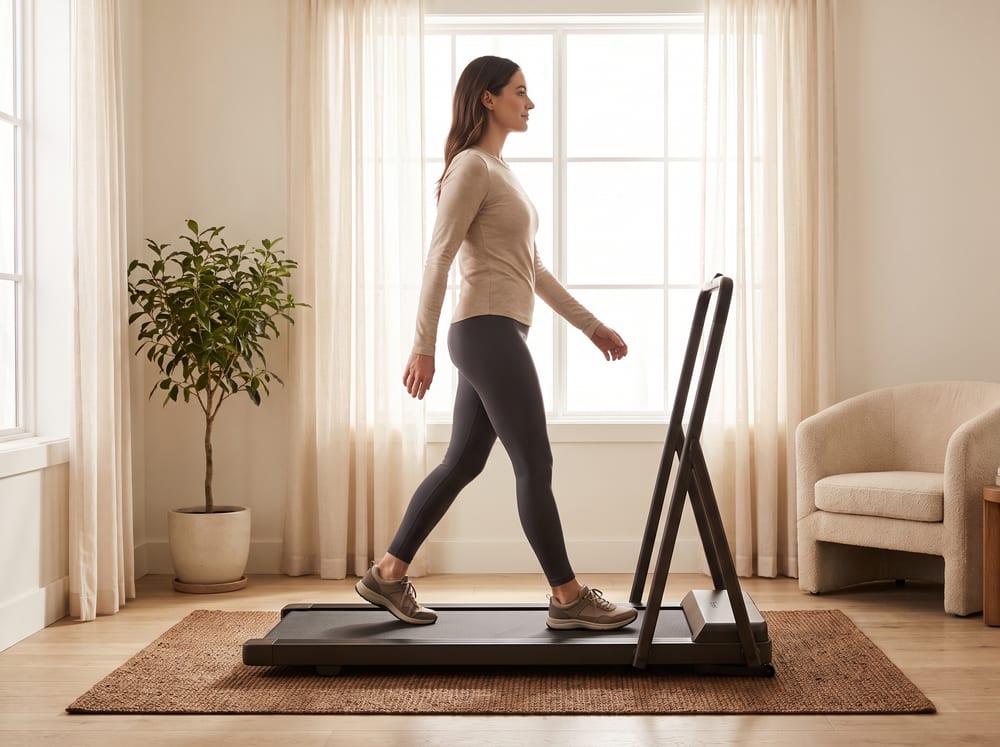
The trial behind this entry is Parco Siu and colleagues, published in JAMA Network Open in 2021. They took 320 adults aged sixty and over who met the DSM-5 definition of chronic insomnia, who had slept badly for about ten years on average, and split them three ways: twelve weeks of Yang-style 24-form tai chi, twelve weeks of brisk walking and strength work on the same schedule, or no new activity. Both classes ran three one-hour supervised sessions a week. Sleep was measured with a wrist actigraph worn for a week at a time, which records movement through the night and estimates when a person is asleep and when they are awake. At twelve weeks the tai chi group spent 13 fewer minutes awake after first falling asleep than the control group, woke about two fewer times a night, and slept 3.4 percentage points more of their time in bed. The walking and strength group moved by about the same amounts, and the two classes did not differ from each other on the wrist measures. Two years after the classes ended, both groups were still ahead of control, and tai chi had pulled further ahead on sleep efficiency, at 6.2 points over control. On interviews by assessors who did not know the group, 34 percent of the tai chi group no longer met the criteria for insomnia at twelve weeks, against 2 percent of controls. Total sleep time did not change in either class. The mechanism nobody has pinned down. The two plausible routes are the ones any regular daytime exercise offers older adults, more physical tiredness by night and a steadier daily rhythm, plus whatever slow attentive movement does for arousal at bedtime. The trial cannot separate them. What it does show is that tai chi and conventional exercise land in the same place on the objective measures, so this entry suits someone who would keep up a tai chi class and would let a walking programme lapse. The limits are real. It was one centre in Hong Kong, 80 percent of the participants were women, and everyone knew which class they were in, so expectation may account for some of the effect on the self-reported measures. The authors call the absolute gains modest: thirteen minutes less awake in the night, from a starting point of about 77. An earlier trial pulls the other way. Michael Irwin and colleagues (Sleep, 2014) randomised 123 adults over 55 with insomnia to four months of cognitive behavioural therapy for insomnia, Tai Chi Chih, or a sleep education seminar. At four months 54 percent of the therapy group were in remission, against 30 percent with tai chi and 21 percent with the seminar, and tai chi did no better than the seminar on remission or on overnight sleep lab measures. That trial used a different form, once a week. The weight of evidence puts tai chi alongside other regular exercise as a modest help for sleep in older adults, with CBT-I as the stronger treatment.
How to do it
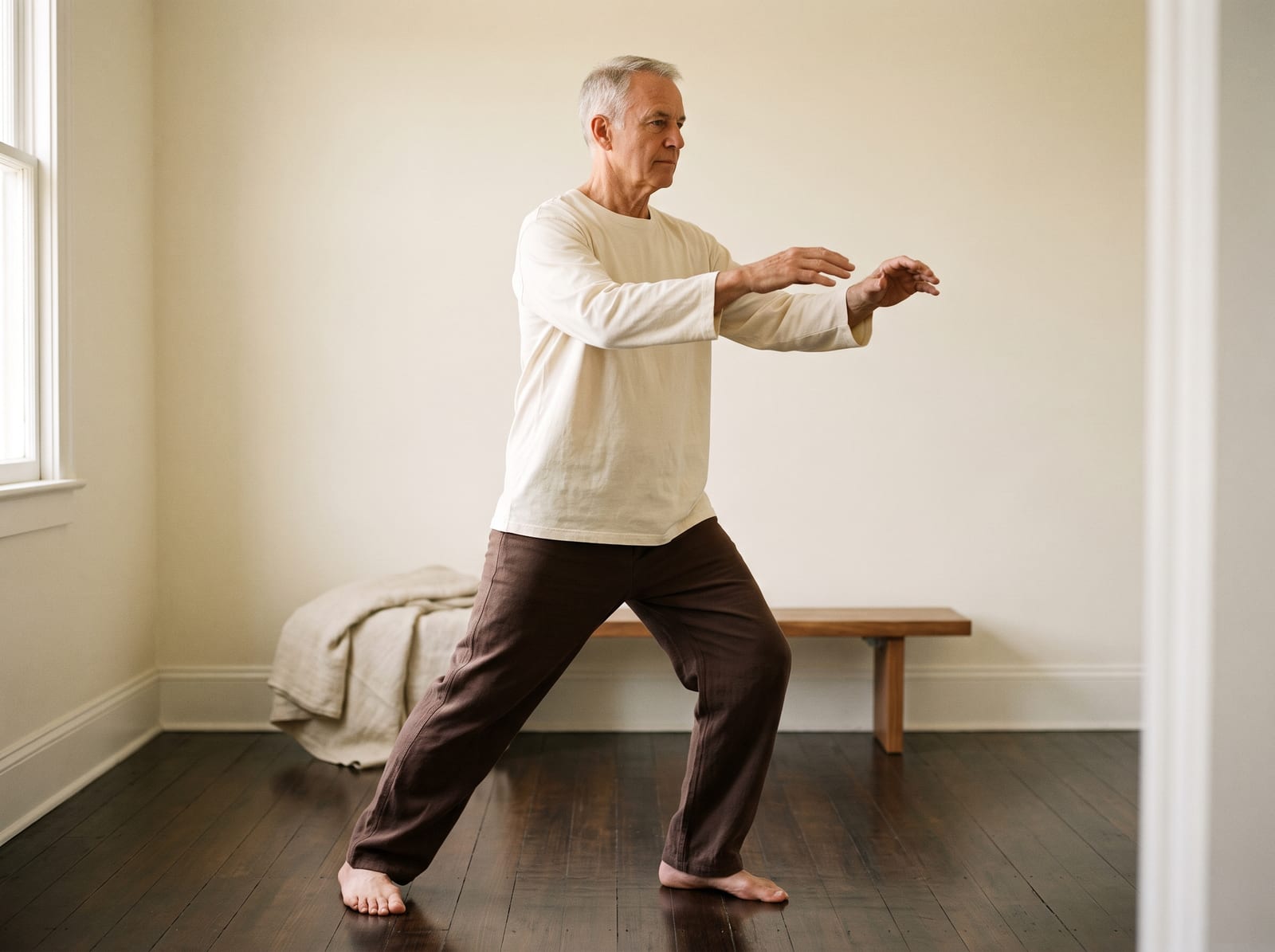
- Find a Yang-style 24-form class, sometimes listed as the simplified 24 or Beijing 24 form. That is the sequence the trial used. A teacher matters more here than with most exercise, because the forms are learned by copying a person.
- Book the sessions in daylight, morning or afternoon. The trial ran its classes in the day, and nothing about this practice was tested as a bedtime routine.
- Start each session standing with feet under the hips, knees soft, weight even across both feet. Give it a quiet minute before anything moves.
- Warm up with five minutes of slow weight shifting from one foot to the other, letting the unweighted foot go light without lifting it.
- Work through the forms at the pace the teacher sets, slower than feels natural at first. Knees track over the toes, the spine stays tall, and the arms follow the turn of the waist.
- Breathe through the nose in your own rhythm. The trial did not prescribe a breath count, so there is nothing to match.
- Run the full hour, warm-up and cool-down included. Three of them a week, for twelve weeks, is the dose that was tested.
- After the twelve weeks, keep going on your own or with the class. The authors credit the two-year result to people who kept practising.
Dose: One hour, three days a week, for twelve weeks, then continued. The wrist measures in the trial were taken at the end of week twelve and again two years after the classes ended.
⚠ This is educational content to discuss with a clinician, and it is no substitute for assessment of a sleep problem. Cognitive behavioural therapy for insomnia (CBT-I) is the recommended first treatment for chronic insomnia; in a 2014 trial of 123 older adults it outperformed tai chi. Tai chi fits alongside CBT-I, or in its place when CBT-I is out of reach. Loud snoring, gasping or stopping breathing in sleep, restless legs at night, or heavy daytime sleepiness point to a sleep disorder that exercise will not fix, and those need a doctor. Standing practice on soft knees is demanding on the legs at first, so stay near a wall or counter in the early weeks and sit down for dizziness. Ask your clinician before starting after a recent fall or joint replacement, with inner ear trouble, or with uncontrolled blood pressure. Keep taking any sleep medication as prescribed and talk to your prescriber before changing it.